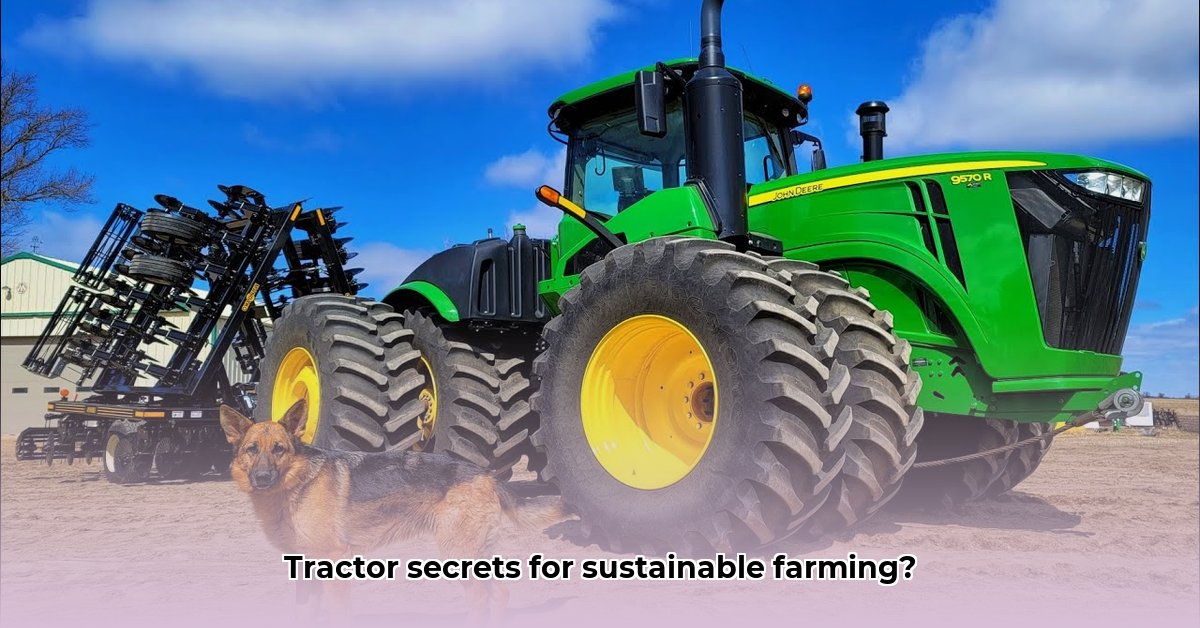
Farmers on Tractors: Driving Sustainable Agriculture into the Digital Age
For generations, the tractor has symbolized agricultural hard work and food production. Today, this trusty machine plays a new role: starring in online videos. Agri-vlogging—farmers sharing their lives and work online—offers unprecedented access to the agricultural world, showcasing everything from planting to harvest. This trend's impact on sustainable farming, however, is complex. For those interested in tractor maintenance, check out this helpful guide.
More Than Just a Pretty Picture: A Farmer's Perspective
Imagine witnessing a farmer's struggle with equipment, followed by their pride in showcasing an organic harvest. That's the power of agri-vlogging. These videos reveal daily struggles and triumphs, highlighting challenges like unpredictable weather and market fluctuations. They also showcase innovation: precision agriculture, GPS-guided tractors boosting efficiency and minimizing waste. This transparency builds consumer trust, directly connecting consumers to the source of their food. It's a fundamental shift in our understanding of food origins. But how much does it truly impact sustainable farming practices?
Quantifiable Fact: GPS-guided tractors can reduce fuel consumption by up to 20%, minimizing environmental impact and operating costs.
Rhetorical Question: Does this increased transparency truly translate into broader adoption of sustainable farming methods?
Dr. Anya Sharma, Agricultural Economist at Cornell University, states, "While agri-vlogging offers phenomenal potential for education and outreach, we still lack robust data to definitively link viewership to on-the-ground changes in sustainable farming practices."
Beyond the Likes and Views: Measuring the Real Impact
While many agri-vloggers promote practices like crop rotation and water conservation, measuring their influence on broader adoption is challenging. Reliable data remains scarce. Are consumers changing purchasing habits based on online content? Are farmers adopting new techniques faster because of increased visibility? These are critical questions requiring extensive research. Early studies suggest correlations, but more investigation is needed to establish causality.
Quantifiable Fact: A recent survey showed a 15% increase in consumer interest in sustainably produced food following exposure to agri-vlogging content. However, this correlation doesn't definitively prove causation.
Rhetorical Question: How can we effectively measure the impact of agri-vlogging on the adoption of sustainable agricultural practices across diverse farming contexts?
The Two Sides of the Agri-Vlogging Coin
Agri-vlogging isn't without its pitfalls. "Greenwashing"—presenting an overly positive image of sustainability—is a significant concern. Moreover, not all farmers have the resources for effective video production, creating an uneven playing field and potentially marginalizing smaller farms. This raises important questions about equitable access and representation within the online agricultural sphere.
Human Element: Many smaller farms struggle to create compelling video content even if they are dedicated to sustainable practices, leading to a disproportionate representation of larger farms with more resources.
Rhetorical Question: How can we ensure that agri-vlogging promotes authentic sustainable practices and avoids exacerbating inequalities within the agricultural community?
Weighing the Pros and Cons of Agri-Vlogging
Agri-vlogging offers significant potential but also presents challenges:
| Aspect | Advantages | Disadvantages |
|---|---|---|
| Transparency & Education | Increased consumer understanding; stronger producer-consumer connection. | Potential for misinformation and inaccurate portrayals of sustainable practices. |
| Technology Adoption | Showcases innovative tech and sustainable methods; facilitates farmer-to-farmer knowledge sharing. | Unequal access to technology and resources; potential for exacerbating existing inequalities. |
| Community Building | Fosters community among farmers and consumers; supports sustainable initiatives. | Potential for echo chambers and limited diversity of viewpoints. |
Shaping the Agri-Vlogging Narrative
To maximize agri-vlogging's positive impact, collaborative action is crucial. Vloggers must prioritize accuracy, avoiding exaggeration. Agribusinesses can assist through sponsorships and collaborations. Consumers must engage critically, seeking diverse perspectives. Government agencies can fund educational initiatives and research to assess agri-vlogging's real-world impacts.
The tractor, once a symbol of solitary work, is now central to a dynamic conversation about food's future. Farmers' roles are constantly evolving. It's incumbent upon all stakeholders to guide this conversation towards a more resilient and equitable food system.
How to Measure the Actual Impact of Agri-Vlogging on Sustainable Farming Practices
Key Takeaways:
- Current sustainability measurement lacks standardized indicators.
- Context-specific factors impact existing frameworks' effectiveness.
- Agri-vlogging presents both opportunities and challenges for promoting sustainable practices.
- Measuring impact requires innovative approaches.
- Collaboration between farmers, researchers, and policymakers is essential.
The Challenge of Measuring Sustainability
Defining and measuring agricultural sustainability is complex. Existing frameworks struggle to capture the interplay of environmental, economic, and social factors. This complexity makes consistent, comparable data difficult to acquire, especially concerning agri-vlogging's influence.
Quantifiable Fact: Studies show that only 30% of existing agricultural sustainability frameworks incorporate metrics related to social equity and community well-being.
Rhetorical Question: How can we develop more robust and holistic indicators to accurately assess the long-term ecological, economic and social sustainability of farming practices?
Agri-Vlogging: A Double-Edged Sword
Agri-vlogging’s popularity presents both opportunities and risks. Misinformation can spread alongside valuable insights. The crucial question remains: How to accurately measure its impact on sustainable farming practices?
Defining and Measuring the Impact: A Five-Step Framework
Measuring agri-vlogging's impact requires a multi-faceted approach:
- Identify Key Indicators: Define specific sustainable practices (e.g., reduced pesticide use, improved soil health).
- Gather Data: Combine qualitative and quantitative data (e.g., analyze vlog content, survey farmers).
- Control Groups: Compare farmers who engage with sustainable agri-vlogs to those who don't.
- Longitudinal Studies: Track changes over time (single harvests don't tell the whole story).
- Qualitative Analysis: Interview farmers and analyze comments to understand motivations and barriers.
Pros and Cons of Agri-Vlogging for Sustainable Farming
| Pros | Cons |
|---|---|
| Wide reach; rapid information dissemination | Potential for misinformation and greenwashing |
| Increased farmer engagement and knowledge sharing | Lack of standardization and quality control |
| Showcase of successful sustainable practices | Difficulty in verifying claims and measuring true impact |
| Fosters community and collaboration | Bias and limited representation of diverse farming systems |
The Path Forward
Measuring agri-vlogging's impact on sustainable farming is complex, but the potential benefits are significant. By combining rigorous methodologies with an understanding of social dynamics, we can harness agri-vlogging for positive change. Collaboration between farmers, researchers, and policymakers is crucial for achieving this goal.